Monday, April 30, 2018

A-Z Challenge: Y is for Source and Z is for Zambian Water Spirits

It's the final day for the AtoZ Challenge and we are at the letter's Y & Z.  I'm posting about two different sea creatures in the Under the Sea Myths & Legends theme today. For the letter Y, I'm featuring a myth that as far as mythical beings go, is pretty creepy looking. This sea creature lives near the rivers in the Amazon.

Yacuruna


This legend, according to sources, lives in underwater cities and resemble humans, and is described as hairy beings with abnormal feet and--here's something strange--they can rotate their head backward. Yuck.

Source
The image here depicts a Yacurana holding a snake and riding a crocodile. Legend says the Yacuruna mythical beings sometimes kept company with the reptiles. Additionally, they lived in crystal palaces under the water.  Like other myths, they liked to kidnap humans, preferably young women. That's a shocker, huh? I often wonder if young women disappeared for other reasons, not unlike today, and their local villagers created these wicked tales to cover up something even more nefarious done by humans rather than legends. Who knows? Anyway, these Yacuruna were considered dangerous. They liked to shapeshift into other humans and then lure females into their water worlds. One tale said a young female vanished by the Yacurana and later she appeared as a mermaid with healing powers.

Whatever mystical powers they have, the one that's most interesting is their healing powers.  Sources say a shaman can summon a Yacurana to help with the healing of their humans who are sick. This was the first time I learned about a creature that could be summoned to heal a person's illness. Apparently, an important bond can be created solely between a shaman and a Yacurana to help aid humans.  Among the locals, these creatures are considered gods with untold powers in the Amazon. That said, I'd have to say they are formidable beings.


The Letter Z


The letter Z was a doozy to find an underwater creature or myth. The first creature I found was for a water spirit called Zin. Unfortunately, I didn't find much information about it, so I decided to feature a different one. For my letter Z, check out

Zambian Water Spirits

There are many legends based on the Zambezi River in Africa to include water spirits and mermaids like the powerful god, Nyami Nyami (a.k.a. “Zambezi Snake Spirit”) or the famous water spirit, Mami Wata. The waters of Zambezi River and Victoria Falls are considered magical. Some of the legends say the mythical deities would roam the area and expect offerings from the locals and can become lethal when not honored. 
Nyami Nyami was said to be content until the 1940's when outside civilization entered their territory and built a damn. The damn offended the god and kept him from his wife.  During its construction, the area suffered mass flooding and deaths and many believed it was the wrath of Nyami. After it was completed, the myth said the irritated god disappeared back to his world and away from humans. Interesting, huh? 

Mami Wata translates to "Mother Water" which is really quite lovely. This water spirit represents water, healing, sex, and fertility according to folklore.

That's it for the letter Y and Z and thankfully for this challenge.

If you missed my last post for the letter X for Xana, a water fairy.

Mina Burrows

Friday, April 27, 2018

A-Z Challenge: X is for Xana

Today for the AtoZ Challenge we are at the letter X.  My Under the Sea Myths & Legends theme found an interesting creature to discuss.

Xana


Xana is described as a fairy from Asturian mythology in north-west Spain. This fairy female has long blond locks and prefers to hang out near water fountains, streams, waterfalls etc... Some references depict the Xana as bad while others say she can bring fortune and untold wealth to humans.

Source
A Xana looks like a young beautiful female, but the being is more fae then human and has magical powers. A Xana's voice can be alluring to humans and it's said a pure soul can hear her melodic sound and feel love and peace. An evil person who hears the voice can go mad. Xanas can be kind or they can be evil. Some myths say they've attacked humans and stolen their children and food.

As far as water creatures go, this one seems to be a bit milder than the rest which is fine with me. I'm just glad I found a creature for the letter X.  Right?

Yesterday, I posted about Tolkien's fictional character, Watcher of the Water. If you get a chance, check out that one too!

See you next time for the letter Y & Z!

Mina Burrows

Thursday, April 26, 2018

A-Z Challenge: W is for Watcher in the Water

We are at the letter W today for the AtoZ Challenge. Whew! We're down to the final letters on for this challenge. Yes!  For the Under the Sea Myths & Legends, I thought about many different myths such as another type of Water Sprites and other types of whales but then decided to post about a fictional creature who embodies the idea of myth.

Watcher in the Water


 J. R. R. Tolkien's fantasy series The Lord of the Ring took the concept of myth with it's fictional Middle-earth world of creatures, places, and beings and created an epic tale that felt mysterious, ancient and a tad real at times. This series is a masterpiece on how a fictional story can create the illusion of lore and legends. 


The sea monster, Watcher of the Water appears in The Fellowship of the Ring, where he's lives in a lake near the entrance to the dwarf-realm Moria. The description of the creature is a monstrous underwater beast with mass amounts of tentacles and a head that could be comparable to that of a spider. He has razor sharp teeth and his tentacles can slice it's prey dead. That's the general appearance of the monster, but usually, when it came to Tolkien, he could take a creature like an octopus and revamp it into something that could devour a Kraken.

I found this in-depth character review of the Watcher of the Water. It's incredibly entertaining and I highly recommend it if you're a fantasy-geek like me.


In this video, it references one of Gandolf's famous quotes about the unknown darkness that lurks deep within the Moria mountain and on Middle-Earth. In The Fellowship of the Ring, Gandolf says, "There are older and fouler things than Orcs in the deep places of the world." When I think about the sea and the vast amounts of creatures burrowed deep--both known and unknown, I can't help but wonder the very same thing. I suspect Tolkien thought the same thing.

That's it for the letter W. If you missed yesterday, check out another Slavic lore creature called Vodyanoy.

See you tomorrow for the letter X!

Mina Burrows

Wednesday, April 25, 2018

A-Z Challenge: V is for Vodyanoy

We're on to the letter V with the AtoZ Challenge. For my Under the Sea Myths & Legends theme, I'm featuring another Slavic folklore myth about a dark and disturbing sea creature called...


According to the Encyclopaedia Britannica, a Vodyanoy is a type of "water sprite" who is known to be "evil and vindictive" and can drown humans who enter their territory.  The myth warned people who chose to bathe in a stream on a holy day must make the sign of the cross before doing so or else the Vodyanoy would strike. Ugh. Some of these legends and their reasonings seem positively ridiculous. Then again, maybe people couldn't swim so a blessing before hitting the water certainly could hurt. Right? 

Source
Previously, I blogged about another Slavic creature, Rusalka who, like Vodyanoy enjoyed drowning humans too. Another source mentions this sea monster, like the Rusalka, hangs out in the water, only it's a male not female. His description varies from an overly-large frog-like creature with quasi-JaBba the Hutt features to an elderly male with greenish hair and a long beard. He's said to live near rivers and streams and if angered can also drown humans by destroying their damns, water mills etc... He's basically one deadly dude if you piss him off.

There's more about this creature in this video here that I didn't find in my research. Apparently, he lures and captures young maidens with a flower and then takes them to his underwater realm where they serve him. Uh, that's creepy and totally cool too.   


That's it for the letter V.  Tomorrow is W for Watcher in the Water.
If you missed yesterday, check out my post on Umibozu


Tuesday, April 24, 2018

A-Z Challenge: U is for Umibozu

Today we're on to the letter U with the AtoZ Challenge. My Under the Sea Myths & Legends theme today features a really creepy sea monster from Japan called...

Umibozu


In Japan's folklore, the Umiboza legend is also known as the Sea Monk or Buddhist Monk because of his round head. There are many different accounts of what this creature looks like, but the description that's mentioned most is a gigantic blackened beast with two large eyes and oversized bald head, This legend has been around for centuries. The Umiboza rumors started originally from sightings which then spawned into creative tales about the mysterious creature. According to sources, one mention of the Umibozu can be found "in a collection of writings called Kanso Jigo" from the "Kansei era (1789 – 1801)."

These same sources reference that the Japanese historically feared the ocean and due to that fear, some myths like the Umibozu were created. This particular beast could appear in calm waters to ships. If the sailors saw the beast and tried to speak it, it would enrage the creature and cause certain demise to the ship and everyone on it. Umibozu were so terrifying they could "rise ten feet tall and break ships in two." Yikes! From the looks of this legend, it'd be hard to ignore the creature.

Now you may wonder if this sea myth is real or not? Well, as of 1971, one Mainichi Shinbun newspaper reported that a fishing boat near New Zealand caught a creature tangled in the fishing lines with a similar appearance to the sea monk. The Captain and crew believed the creature to be some sort of monster.  Freaky, huh? Even Japan sent an oceanography team to investigate. If you're interested in learning more about this creature and others Japanese folklore, ghost stories and myths, visit this amazing blog, Hyakumonogatari Kaidankai.

Tomorrow it will be the letter V! Until then, see you later!


Monday, April 23, 2018

A-Z Challenge: S is for Sirens & T is for Triton

Today I'm posting a dual post for the letter S & T with the AtoZ Challenge. This next sea creature is a must with my Under the Sea Myths & Legends theme. For the letter S, I'm posting about one of the mysterious creatures of the sea. S is for

Sirens


According to Greek mythology, sirens were evil temptresses who would use their magical voices to seduce sailors and their ships toward treacherous rocks and cliffs, delivering them to their doom. Sailors were warned not to hear the call of the wanton sirens. These sea myths are not to be confused with mermaids. Although they are similar, sirens are deadlier. Sirens were referred to as part women, part bird for their sing-song beautiful voice. In ancient times, many ceramic references show Sirens with wings and feathered tails.

Source
I found this interesting since I never knew that about these mythological beings. Sources also say that they are descendants of the Greek god, Poseidon, which is incredibly cool.

Homer's Odyssey is one of the famous Greek stories passed down mentioning the sirens. The crux of this tale is that Odyssey had his sailors plug their ears with beeswax to deafen the siren's song and also had them tie himself to the mast. It was told that a siren would die if a person heard their song as was still about to pass through their waters. I guess Odyssey must have killed many sirens that day or so the story says. Pretty cool, huh?

That's ancient Greek mythology though. What about today? Well, other than some fantastic fiction novels and ancient mythological tales, there's little scientific evidence that proves the sirens are real. Sirens are monstrous creatures who live more in our imaginations and in folklore than in reality. If you're interested in watching a hip new television series that features siren/mermaid-like creatures, FreeForm, has "Siren" television show which recently debuted.  I watched a few episodes and it's okay. I think it would be cooler if it had less of a damsel in distress writing and more of a murderous mermaid on a rampage. I don't know. Has anyone else seen this?


The Letter T


For my Under the Sea Myths & Legends theme, I'm posting about Triton, the Greek mythological creature who's the son of the Poseidon and Amphitrite. I previously blogged about the Poseidon here so take a look if you're interested in learning about Triton's Dad.

Initially, I learned Poseidon is the Greek mythology's God of the sea. When he had his son, Triton, he named him the King of the sea, and according to sources, made Triton his messenger. 

Source
Triton is described as a merman, with part fish with fin and scales and the other part a human male. When we think of Triton, most of us think of Disney's The Little Mermaid, with King Triton, the father of Ariel. He's likable charming and overprotective of his children. As a king, he uses a trident similar to his Dad, Poseidon. Some people may not know this, but Triton's conch shell was a great source of power. When blown, he could summon or calm the waves or even rile other water creatures. As a son of Poseidon and a king in his own right, I suspect he had much power.

Later, Triton the mythological creature was referred to more of a group of mermaids and mermen, as were called the Tritons. Many schools and universities use the mythological creatures as their mascot, including University of California in San Diego.


And that's it for the letters S & T! We're getting close, guys. Six more days left! Whew!

Friday, April 20, 2018

A-Z Challenge: R is for Rusalka

It's Friday and I'm posting for the AtoZ Challenge for the letter R. My theme is Under the Sea Myths & Legends and I'm excited to feature Slavic mythology and folklore with the sea creature...

Rusalka


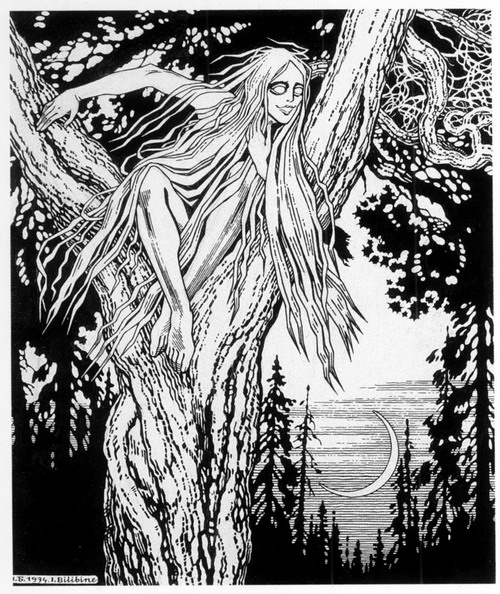
According to sources, these mythical creatures are referred to as a mermaid, siren, a water nymph-like sea legend who originated from  Pagan Slavic tribes. These creatures were at one time referred to as fertility blessings and it wasn't until the 19th century when they were deemed evil. Some of these myths say young women who died or drown in the water would come back to life and haunt the shoreline as a Rusalka. Unlike mermaids, they didn't have fins and must stay new the water, shore, using trees or rocks to lurk for their prey.

Source
The Rusalka find young men and lure them into the water, their beautiful looks. Once in the water, they use their long red tendrils of hair to wrap and perhaps strangle the unsuspecting lover.  If the victim realizes he's in danger, he may try to grapple, but the Rusalka's skin turns slippery and any effort to flee is futile. *shivers* Wow, that's creepy.

Slavic cultures celebrated these sea monsters well into the 20th century with an annual week called Rusalka Week.  Every summer, usually during the first week of June, people would avoid the water, no swimming etc... because the Rusalka would be most deadly and or powerful during these times. The Rusalka like to dance under the moonlight where onlookers would wander and capture a glimpse of the creatures. If caught by a Rusalka during this time, it meant certain death.  To ward off these evil-spirited creatures, the villagers would hold fake burials near the water. Doesn't sound like that would help, but I guess people did strange things back then.

If you're interested here's another cool video that features this creature and other Slavic myths. The Rusalka is number 1 on the list here so you can skip to the end or watch the whole thing. Enjoy.


That's it for my letter R. Have a great weekend.